
Beth Lunde
-
Beth Lunde published Education and Engagement Committee Update in Cause (c4) 2024-01-26 10:37:07 -0600
Education and Engagement Committee Update
By Kumari Ghafoor-Davis
 Happy December, beautiful MOBB United Moms! We have had a busy year. One of the goals of the organization is to provide critical support to Moms and further their ability to advocate on behalf of their sons. The Education and Engagement Committee has several projects we have been working on to stay true to the MOBB United mission.
The Education and Engagement committee kicked off a collaboration with “Black Minds Matter”, a course created by Dr. Luke Wood of San Diego State University. This 8-week course ran from October 23 through December 11 (Mondays at 4:30 p.m. PST / 730 p.m. EST). The course’s purpose was to help us understand how the school-to-prison pipeline can affect our sons from preschool onward due to the way our boys are treated, engaged, and spoken to by teachers. We have learned about how we all can have unconscious/implicit bias and how our boys can be deliberately disregarded by racial preference in classrooms. We also learned about the ascriptions of intelligence, which assume that our boys are not intelligent, and how criminal behavior is assumed from very early ages. The course also had a forum after the calls where participants asked questions and voiced opinions and comments in a safe space. Drs. Luke and Idara Wood were our featured guests on the November MOBB United National Calls. You can find the links to listen to those calls here and here.
We also recently partnered with Katie Ishikura and her non-profit organization “The Conscious Kid Library.” For the holidays, we launched a project together that gives moms access to a list of books for our sons as well as allows us to subscribe to the Conscious Kid book rental model where for a minimal charge ($9 a month), our boys can receive three books a month that are written by black authors with black heroes/main characters. The books will be delivered around the 1st of the month and picked up around the same time, so our sons (ages 4-18) can read more books that help them identify with characters who look like them. This project honors our mission by not only assisting our boys to have better perceptions of themselves but also by helping them to read more. Getting our children to read more has become the goal of many school districts across the country since studies like the Annie E. Casey Foundation’s have shown that the success of our boys is strongly correlated with learning to read at grade level by the 3rd grade.
There’s much more to come as the school year moves quickly. For now, we would like to remind high school senior parents to connect with your school’s guidance counselor/social worker so that your children can apply for college financial aid for next Fall. Applications can be submitted from October 1st every year and should be completed by June 30th, 2018. Please be aware that filing early can allow for more funds to be available for your child for college. Also, be mindful that parents of freshmen, sophomores, and juniors should already be taking their children on college tours and considering college size (including classroom size), majors, course offerings, college philosophy, and professor experience. All of these can indirectly affect our children’s success in college and their ability to complete their coursework and graduate. Parents of all children should take advantage of any assistance their children can utilize during the school year, including tutoring, summer programs, SAT Prep, College Prep Courses and programs, (like Upward Bound), etc.
As we move into the new year, we would like to remind parents to review the School Tips that were posted in August with their children. Follow up can include discussing/reviewing any goals that your family decided to work on for the school year. Revisit your vision board and see if you are on track. For example, if a mom had a “parent promise” of not yelling, she should revisit and discuss this goal with her child to see if she has been yelling less. We all have things in our lives we would like to change to make us more productive and sometimes we need to revisit our goals and tweak them accordingly.
Have a wonderful holiday. See you in the New Year.
-
Policy and Advocacy Committee Progress
By Delicia Hand and Frankie Robertson

The MOBB United for Social Change, Inc. (MUSC) Policy and Advocacy Committee sets the strategic policy priorities and drives advocacy initiatives for the organization. As a committee, we set and lead execution of MUSC’s policy agenda, research policies that impact Black men and boys, identify opportunities to advocate on behalf of our sons, and guide MUSC’s approach and responses to instances where Black men and boys have been victims of unjustified force and violence by police.
In early October, we facilitated a Train the Trainer session with city and chapter leads and hosts for Pink Postcard Parties, which occurred throughout November. The session highlighted for participants the key objectives of advocacy, the importance of having a clear message, and the effectiveness of having concrete proposals and solutions to offer to policy makers. We then outlined the important role of the postcard, as well as the importance of gathering together as moms committed to a better world for their sons. City and chapter leads then took this information and provided trainings at the start of their postcard parties and deployed the postcards to introduce MUSC to policy makers all across the country. As we move into 2018, the Policy and Advocacy committee will provide regular training for our moms to ensure that members become effective advocates. Additionally, we will begin to deploy the pink postcards on a regular basis to drive and communicate about key initiatives.
A successful Policy and Advocacy program isn’t always out on the front lines. Successful advocates know how to identify the right moments to push and pull to ensure visibility and progress on the issues they care about. In addition to timing, success also requires rigorous planning. It involves taking the time to build the necessary capacity to develop strategic plans and partnerships to ensure that when the right moments to advance an issue arise, we are prepared. This Fall, the Policy and Advocacy Committee continued to work with our Call Center to take action around Rapid Response incidents. Additionally, we doubled down to do the necessary work to ensure that we have a successful legislative season when it begins in January, 2018. In addition to digging into the key issues affecting our sons, we have been exploring potential opportunities and partnerships for the key legislative issues that we will take on in 2018. Watch this space; as this work nears completion, we will soon be back on the beat with new tools and a refined focus for 2018. Specifically we will have:
- 2018 Legislative Platform -- A clear roadmap and summary of the key legislative issues that the organization will be supporting in 2018. This will become a new resource for members who can bring our platform with them to meetings with policy makers across the country
- 2018 Electoral Advocacy -- Quarterly initiatives that are geared toward ensuring that our moms, sons and other loved ones are engaged in the electoral process. We will sponsor voter registration drives, prepare candidate questionnaires, identify and organize attendance at candidate forums, and help to increase voter turnout.
If you have the drive to seek policy solutions and be an advocate for your son(s), then please join the Policy and Advocacy Committee. If you have a background in law or policy, then the committee especially needs YOU! We meet every other week on Thursdays via conference call at 10 PM ET. For more information contact: [email protected]
-
Black Maternal Trauma - Part 3
By Uchechi Eke
 This article discusses the impact of negative, derogatory terms and stereotypes on the psyches of mothers and their sons. Influencing policy impacting how Black boys and men are treated and perceived by law enforcement and society is central to the mission of MOBB United. At the heart of our work is the need to dismantle wrongly held views of our sons and redress racial perceptions of crime. When our sons are labeled as ‘thugs’ and criminals, how does this affect our ability to raise and protect them? Moreover, what role does stigma play on their mental and emotional health?
If our sons repeatedly are told that they ‘never will amount to anything,’ and the only place fit for them is a prison cell, this feeds the myth that Blacks are pathologically predisposed to crime and as such, are more menacing and represented more in the prison population. The challenge to dismantle these lies is a real struggle.
An irrational fear of Black boys and men exists, evidenced by older White women who clutch their bags and cross the street when Black men are nearby, and ranging to accounts of police officers fearing for their life as they gun down unarmed Black boys and men.
Being labeled as a stigmatized person and carrying the burden of being Black has substantial effects on the way people think and feel about themselves, as well as how they expect to be treated by others in their environment. The labeling theory posits that people come to identify with and behave in ways that reflect how others label them. It is most commonly associated with the sociology of crime and deviance, where it is used to point out how social processes of labeling and treating someone as criminally deviant actually foster deviant behaviour and have negative repercussions for that person, since others are likely to be biased against them because of the label.
Social conditioning not only affects how we relate to others, but it also influences the way we see ourselves. If all visuals point to a negative image, then the self-fulfilling prophecy is hard to dispel, especially for young Black boys.
Psychological research shows that stigma -- especially when it relates to the label ‘criminal’ -- can interfere with functioning and lead to maladaptive behaviours, poor mental health and difficulty participating in the community.
According to the US Health & Human Services Office of Minority Health (2016):
- Adult Black/African-Americans are 20% more likely to report serious psychological distress than adult whites
- Adult Black/African-Americans are more likely to have feelings of sadness, hopelessness, and worthlessness than adult whites.
- While Black/African-Americans are less likely than white people to die from suicide as teenagers, Black/African-Americans teenagers are more likely to attempt suicide than are white teenagers.
The data reveals a continuing trend -- that our sons face multiple mental challenges affecting their ability to be resilient and predisposing them to succumbing to psychological issues due in part to societal pressures and racial bias.
Black men find themselves disproportionately subject to criminal punishment, for example, because society expects them to commit crimes. Black boys in school find themselves subject to labels such as ‘disruptive,’ ‘disobedient’ or requiring Special Education to temper their ‘hyperactivity’. These labels cause social stigmas, which impact not only our sons’ self-worth, but cause their peers, teachers and authority figures to view and treat them differently.
This association of crime with Black males has been widely researched. Lisa Bloom, in her book Suspicion Nation, points out: “While whites can and do commit a great deal of minor and major crimes, their race as a whole is never tainted by those acts. But when blacks violate the law, all members of the race are considered suspect.” She further says: “The standard assumption that criminals are black and blacks are criminals is so prevalent that in one study, 6% of viewers who viewed a crime story with no picture of the perpetrator falsely recalled seeing one, and of those, 7% believed he was African-American. When we think about crime, we ‘see black,’ even when it’s not present at all.”
If this unconscious bias is held by the general public, the same must be true of police officers – who are also members of society. There is a tendency for law enforcement to view our sons as ‘predatory'. In many cases, police are allowed to rely solely on race as a factor in selecting who they deem to be engaging in criminal activity or posing a threat. With racial profiling a standard practice, our sons are under constant surveillance. They are unable to travel freely without the risk of being held under suspicion.
This suspicion leads to high rates of unlawful ‘stop and searches’ incidents.It leads to officers harassing, interrogating and humiliating Black and Brown boys and men on the streets and in jails, which heightens tensions and induces a climate of fear.
In a report by the Sentencing Project, it is suggested that the entire government and media machinery is complicit in the distortion of our sons. According to the report: “Whether acting on their own implicit biases or bowing to political exigency, policy makers have fused crime and race in their policy initiatives and statements. They have crafted harsh sentencing laws that impact and disproportionately incarcerate people of colour…. Many media outlets reinforce the public’s racial misconceptions about crime by presenting African-Americans and Latinos differently than whites. Television news programs and newspapers over-represent racial minorities as crime suspects and whites as crime victims.”
Social conditioning has led many to have inherent biases. How our sons are viewed are framed through a number of lenses and mediums – from stories and comments relayed by parents, to false and demeaning historical accounts in textbooks at school, to the vast deconstruction of Black men in the mass media.
We must use the same vehicles to counter these narratives. We must also help our sons know that no matter how others view them, they must have a strong mind, self-worth, personal conviction and a strong value system – one that is reinforced by people who love them. They will undoubtedly face prejudice, but our role is to instil a sense of self-assurance rooted in their heritage and identity that will fortify and increase their confidence. They also need to know their rights, whether in the workplace, in school or when encountering police.
Register at www.mobbunited.org/join as we band together to change perceptions and challenge policies affecting how our sons are perceived and treated by police and society. Also, Moms of Black Boys United, Inc., the 501c3 sister organization of MUSC, needs financial resources to do the important work required to protect our sons. To date, our organization has been completely self-funded; but to grow and expand, we need your help. Please consider donating to Moms of Black Boys United, Inc. this month at mobbunited.org/donate. Also, please learn more about fundraising plans and what else you can do to help.
-
I Am That B____
Protect them? United we will! Moms of Black Boys United continues our mission to protect our Black sons, and people are noticing. On Wednesday, September 27, Huffington Post featured a heartfelt op-ed written our very own Kara L. Higgins, who also volunteers as a MUSC newsletter writer, in response to President Donald Trump's attacks on America's football players for exercising their right to protest.
This MOBB United mom's op-ed was featured on September 27, 2017 by Huffington Post.
I am that B____
By Kara L. Higgins

Allow me to introduce myself. I’m a 30-something, working American mom. I don’t identify with Democrats or Republicans; I’m a middle of the road kinda girl. I’m a blonde-haired, blue-eyed, women’s health care provider and Naval Reserve Officer. I have five kids, and I live somewhere in the middle of America. I’m also that B___ that President Trump called out last week.
My son is a football player. He’s also Black. And he’s the kid that every white, corn-fed football fan wants on their team. Neighbors jokingly place bets on which Division 1 team he’ll play for someday. He’s strong, fast, and a naturally crazy-good athlete.
My same Black athlete also is the boy that recently, while on vacation in Florida, reminded me of Florida’s gun laws and Trayvon Martin’s death and said that he wanted to hold my hand whenever we entered a public place. We, his very white parents and older siblings, listened as he and his Black brother told us how every time they are in a public place without their family, they feel afraid. Afraid that white people don’t like them and policemen think they are “bad guys”. While we personally know police officers in our church and community, it took a pep talk to get him to stand next to a State Trooper during a recent college football event. It’s not fair to the officer, whom I believe entered his profession with the intention to serve and protect, is being feared by a little boy. But I also believe that the officer, like too many Americans, has not had the personal relationships with Black friends that would strengthen his belief in equality and shatter his preconceived fears of Black America. Being my son’s mama, my eyes have been opened wide to his experience being Black in America.

Kara L. Higgins and her sons

Kara L. Higgins and her familyA few years ago, friends, I would not have been offended if you joked about my Black son being a better athlete than my white one. A few years ago, I wouldn’t have worried if he wandered around our local high school stadium without me by his side, protecting him from crowds of white people. And I may not have even noticed when that security guard at Target followed him as he went to look for a can of tomatoes for me.
But now I see it. I see how my friends that once wanted to hold and snuggle my African babies will quickly complain that the athletes of their favorite team need to keep politics out of sports. I carry it in my heart when congregants in my church will joke around with my boys, yet lecture me that Black Lives Matter is promoting police brutality. I feel completely betrayed when my white Evangelicals side with our President in saying that kneeling isn’t about race; it’s about disrespecting the flag. You can talk to my son about what skills he can offer your team, but you can't listen to him when he shares his experience as a Black American.
Don’t you see that America is not a flag or a ritual? America is built on the ideal we don’t have to be the same to be equal. America’s patriotism is in serving one another in times of despair and crisis. America’s patriotism is not an exercise toward the flag, but in joining together for the greater good of others, and in protecting those that cannot defend themselves.
America, I want you know that every mom of every Black boy in America sees you. We see that you want our sons scoring touchdowns and standing quietly on the sidelines while their friends, their fathers and the men with whom they identify are profiled, labeled, misunderstood and made to stay quiet. I want you to understand that kneeling is about not getting arrested or shot. It’s about generating a dialogue that America needs: This anthem represents pride and patriotism to some, but to others, a history of oppression. We still need to fight for liberty and justice. And I want you to know that every mom of these Black boys is committed to using education, politics, prayer and unity to bring liberty and justice for all Black boys and men too.
Yes, Mr. President, I am that B____, with that son, on that field.
Kara L. Higgins, is a volunteer writer and member of a non-profit organization formed by concerned mothers who want to work together to make a difference in how Black boys and men are perceived and treated by law enforcement and in society. What started as a Facebook group of about 30 women has grown into an online community of more than 180,000 moms nationwide and globally, representing every race, age, religion, socioeconomic background, marital status and education level. Learn more @ mobbunited.org
-
Beth Lunde published Education and Engagement Committee Overview in Cause (c4) 2024-01-23 09:12:48 -0600
Education and Engagement Committee Overview
By Kumari Ghafoor-Davis

The Moms of Black Boys United, Inc. Education and Engagement Committee works to provide informative resources and referrals. The committee connects with community organizations and forms partnerships with law enforcement agencies, schools and other organizations to support the growth, development, and success of Black boys and men. Moms can get information and resources to be even better moms and seek guidance about their children’s social, academic and emotional development when they have questions or when their children are struggling in school. As moms, we know that education decreases victimization, so we must support all moms to assist their children in being self-sufficient as well as socially, emotionally and academically empowered. Moms who want to be a part of the Education and Engagement Committee and/or moms who have questions about their sons pertaining to education, can reach out to us at [email protected].
The Education and Engagement Committee also has partnered with San Diego State University to provide a free online course titled “Black Minds Matter” this fall. This opportunity, led by Dr. Luke Wood, an Associate Professor at the college, can be utilized by our moms as a resource. The “Black Minds Matter” course will focus on addressing the experiences and realities of Black boys and men in education and the ways Black minds are engaged in the classroom. The course also will balance a discussion of issues facing Black male students, as well as offer research based strategies for improving their success. There will be several speakers during the series. Many are professors at other universities, such as the University of Southern California; UCLA; and the University of Chicago. Other partner organizations are: The Campaign for Black Male Achievement; The Education Trust West (a policy organization led by the former Secretary of Education under President Obama) and Our Scholarship Matters (an apparel company that helped fund/promote the course).
Moms of Black Boys United, Inc., the 501c3 sister organization of MOBB United for Social Change (MUSC), needs donations to provide the much needed support to moms and sons. Pleaselearn more about fundraising plans and what else you can do to help. The work is crucial, so we hope you'll consider donating today at mobbunited.org/donate.
-
Policy and Advocacy Committee Progress
By Delicia Hand and Frankie Robertson

This summer, in partnership with our 501c3 sister organization, Moms of Black Boys United, Inc., the Policy and Advocacy Committee of MOBB United for Social Change, Inc. (MUSC) has focused on outreach to congressional and state representatives. Revamping #MOBBUnitedGetInvolved, we reached out to and organized meetings with key stakeholders, congressional representatives in particular. We kicked off the initiative with outreach to members of the Congressional Black Caucus (CBC). The objective of these meetings was to:
- Introduce Moms of Black Boys United as a resource to members and their constituents.
- Introduce MUSC as a new but critically important voice for moms of Black boys nationwide who want to secure policy changes to ensure that our sons thrive and survive.
- Learn about policy makers’ legislative agendas and identify ways in which we can partner with them.
Our meetings were a great success. We reached out to more than 20 CBC and congressional members; attended approximately 12 meetings and August recess town hall events; and had one meeting with a state legislative representative in a member’s home district. For MUSC’s first effort at congressional outreach, this indeed was a positive start to building our range and reputation as an organization. Our work resulted in many suggestions and opportunities for partnership, including discussions about partnering with Sen. Kamala Harris to provide support for a bail reform proposal.
Pivoting from these meetings, a small delegation of members attended the CBC’s Annual Legislative Conference (ALC) in mid-September. As the country’s key policy conference on issues impacting Blacks in America and globally, participation in the ALC provided key learning, advocacy and networking opportunities. Founder Depelsha McGruder and MUSC members attended several sessions on criminal justice reform and Black boys and men, interacting with legislators, professors and organizational leaders. Sessions included:
- The History of Policing Black America and its 13th Amendment Roots
- Preventative Strategies for Black Youth in the Juvenile Justice System
- Criminal Justice Reform: Making America Accountable for Black Lives
- The Resistance: An Intersectional Strategy Session
- Policing Black Men and Boys: Are the Odds Against Them?
Depelsha also co-hosted the 'Taking it to the Screen' Short Film Screening and Panel Discussion on September 21st in partnership with the Social Cinema Project. With an audience of more than 90 attendees, the panel discussion covered media images, police/community relations, restorative justice and violence in our communities. The event, also a Woke Mom meetup, was held at Busboys and Poets Restaurant in D.C. MUSC thanks Ralph Scott of Social Cinema for the great partnership. Depelsha was pleased to meet and introduce Congressman Hank Johnson (D - GA) from her home district in GA, and she was excited to meet 15 local D.C. members of MUSC. Check out the press release from the event to learn more about the films and participants.
The week was a powerful opportunity to get re-engaged, meet with policy makers and identify future partners for our important work.
Moving forward, we plan to make the ALC one of our cornerstone events where we will have even greater presence. We also will seek organizational meetings with policymakers while we are there in Washington, D.C. For now, as Fall begins, MUSC’s Policy and Advocacy committee is planning for the 2018 legislative sessions and the 2018 midterm elections. Prior to the start of the legislative season, MUSC will develop a platform to guide the organization’s legislative advocacy work. The platform will outline key issues that MUSC will support in its state, local and federal campaigns. Having this platform will allow MUSC proactively to identify opportunities and policy initiatives that improve outcomes for our sons, and we will organize our campaigns in support of these initiatives. Currently, the committee is conducting research to develop the platform. Are you aware of policy initiatives that MUSC should or could support? Make sure your voice is reflected in our legislative platform by contacting us at [email protected].
Since the 2018 midterm elections are approaching, this is the time to make sure you and your sons -- and all your eligible family members -- are registered to vote. Make sure you are aware of any elections in your communities. Educate yourself about local candidates. The Policy and Advocacy Committee soon will begin executing a plan to ensure that moms’ voices are present and accounted for in the upcoming elections. If you are interested in getting involved in our electoral advocacy work, email [email protected] for more information, and join our bi-weekly policy update calls Thursdays, 10pm ET.
-
Beth Lunde published Supporting Moms of Black Boys United, Inc. in Cause (c4) 2024-01-23 07:43:44 -0600
Supporting Moms of Black Boys United, Inc.
By Crys Baldwin and Vanessa McCullers
 This edition of the newsletter is dedicated to Moms of Black Boys United, Inc., the 501c3 sister organization of MOBB United for Social Change, Inc. (MUSC). The mission of Moms of Black Boys United is to provide information and support for moms of Black sons while promoting positive images of Black boys and men. In addition to producing image campaigns to change the negative perceptions of our Black sons, we believe in making a difference through a holistic approach to strengthening the overall health and wellness of moms and the families of Black boys and men. This important work must be funded, so we are seeking donations for Moms of Black Boys United. By donating, you will be pledging to support an organization that has a singular focus and mission to protect our Black sons.
With your pledge of support, Moms of Black Boys United can educate the community about our mission by hosting community forums across the nation to educate moms and sons on topics like those covered in the Saturday bi-weekly national status and update conference calls (from Know Your Rights and How to Interact with Law Enforcement to Preventing Bullying and the School to Prison Pipeline), but in person with community stakeholders present. These meetings will provide a platform for our mission to be heard and for moms to gather to raise awareness of our mission and hold elected officials accountable.
Your support will continue our efforts to build the organization, which has a targeted approach to provide comprehensive resources for Moms of Black boys and men by providing the following:
- Informational webinars/seminars featuring experts with advice on topics relevant for moms and sons.
- Parenting workshops to support and empower moms by teaching them how to advocate for their sons.
- Victim support funds to support families who have been affected by police brutality.
- A resource database of expert consultants/partnerships that include mental health, education and criminal justice.
How much should you donate to this worthy cause? Here are some more examples of what varying levels of support will allow:
- $250: Helps create and maintain regular seminars/webinars in communities across the country to assist Moms in navigating the education and judicial systems.
-
$100: Helps to fund our image campaigns, distributed through social media platforms and beyond. Image campaigns, like #ProtectThem, are meant to:
-Help change the perception of our Black boys and men.
-Celebrate our Black sons.
-In some cases, provide information to help others understand the plight of our sons and inspire them to advocate on behalf of Black boys and men. - $50: Allows Moms of Black Boys United to provide support to moms who have lost their loved ones at the hands of police brutality. One such way that we have provided support is by assisting with funeral arrangements, providing monetary support in times of need, and helping to identify community/government funded resources to further assist.
Moms of Black Boys United, Inc., as an eligible U.S. charitable organization, is tax-exempt under section 501(c)(3) of the Internal Revenue Code and not classified as a private foundation or certain types of supporting organizations.
Company Donation Matching: While you carefully consider your donation, did you know that many companies support causes that are important to their employees by matching their charitable donations? Before you send your contribution, find out if your company will double or triple your impact to influence change in supporting Moms of Black Boys United. Matching your donation is simple. Enter your employer's name here, or check with your company's human resources department to see if they have a matching gift program. Most companies will provide you with a short form to complete and send to us with your donation. We will verify your donation, and send the completed form to your company for processing. It's that easy!
Let's continue the movement of moms that came before us to press forward as a collective unit across the US and globally to drive change. We each must take a stand -- make it our business -- to do the critical work required to protect our sons. It has been said that when women get involved, a movement becomes serious. You are the movement behind the mission of Moms of Black Boys United. Your donation will help save lives.
When you're ready, you can make a quick and easy donation online to Moms of Black Boys United. If you have questions, send them to [email protected].
Thank you.
-
School-to-Prison Pipeline
By Pamela Wood-Garcia

Painting by Susan Kricorian
With the 2017-2018 school year upon us, we are faced with the fact that we are living amid a socioeconomic regression. The current White House administration has all but vanquished the hope for any kind of reform that benefits people of color. This includes education and prison reform. With Betsy DeVos at the helm of the country’s entire public education system and Jeff Sessions dissecting our criminal justice system, much of the reform that took place during the Obama Administration is literally being reversed. Because of this, we can expect the school-to-prison pipeline to be flooded with even more of the hottest commodity on Wall Street: inmates.
Shares of privatized prison stock are traded daily in America, just like shares of Amazon or Facebook. There is a big difference between what keeps each type of stock viable. The difference is that with Amazon and Facebook, shares of stock go up and down based on sales; but with privatized prisons, the stock goes up and down based on the number of inmates incarcerated at each facility. This form of trading relies heavily on the education system and criminal justice system failing people of color. This overlapping of government and industry is referred to as The Prison Industrial Complex. This phenomenon, which takes human life and turns it into profit, is fueled by the school-to-prison pipeline.
As Moms of school aged Black Boys, we need to know exactly how the school-to-prison pipeline stacks up against our sons. The school-to-prison pipeline is described by the American Civil Liberties Union (ACLU) as being a disturbing national trend wherein children are funneled out of public schools and into the juvenile and criminal justice systems. This trend is accomplished by way of several devices: Zero Tolerance laws, racial disparities, school resource officers, Individual Education Plans (IEPs), and parents who don't know their rights.
Let’s take the time to be open and honest about what American schools are like for most boys and young men of color. Our boys usually have at least one teacher who has an amazing smile and an outstanding record amongst peers for being a stellar educator. This teacher usually is not a person of color and always states that he or she loves having your boy in the class but constantly complains that your child is extremely disruptive. Your child claims he is not doing anything that varies from what other students are doing, yet this teacher wants to put your child on a behavior contract. This way, if your child has a good day, he gets a treat; but if he has a bad day, he gets marks against him in his cumulative file, a permanent record that will follow him into college. Teachers like this usually hone in on children of color with IEPs > and non-apparent disabilities. What was just described is covert racism in the classroom. The Respect Institute has documentation that shows that schools are the main place where hate incidents and racism occur. If a child is on a behavior contract, it makes it easy to implement Zero Tolerance policies when the opportunity is presented.
Zero Tolerance policies were established in the late nineties. These policies place unrealistic responsibility on young people maneuvering their way through their childhood and teenage years. These policies are strict and rigid and leave no room for principals or other school administrators to deal with student conflict with any type of discretion. There are no discussions about certain behaviors on a case-by-case, student-by-student basis. Instead, violations of Zero Tolerance policies, which include possession of illegal drugs on campus, possession of a weapon on campus, smoking on campus, or fighting on campus, lead to out-of-school suspension or expulsion for first-time offenders. Many times, these incidents are referred to school police officers, which sometimes leads to arrests and trips to youth detention facilities. All of this for simple childhood mistakes that could have been handled by a principal or school counselor. The majority of people receiving these infractions are Black or Brown students on IEPs and/or those who have non-apparent disabilities and disorders. Examples of non-apparent disabilities and disorders are attention deficit and hyperactivity disorder, dyslexia, bipolar disorder, and post traumatic stress disorder. These disorders coupled with poor grades and racial disparities cause the school-to-prison pipeline to work in a way that has kept the number of Black students in the juvenile criminal justice system at an all time high for the past 20 years.
Based on data from both the ACLU and the Center On Youth Justice, Black students are suspended three times more frequently than their White counterparts. The ACLU also noted that Black students who are suspended or expelled for discretionary infractions are three times more likely than White students to have contact with the juvenile justice system the following year. This process gets students documented and guided into America’s abyss of a criminal justice system early. Genevieve Jones-Wright, a Black public defense attorney and candidate for San Diego County’s District Attorney’s Office, gave MOBB United for Social change (MUSC) some very powerful advice. “There is a direct connection between students who are given harsh disciplinary sanctions by schools and those who enter the juvenile justice system. And these students are predominantly students of color. The school-to-prison pipeline ushers our babies into the criminal justice system where they are prepared for jail and prison, and not for college. We call our children ‘the future,’ and indeed they are. If we don't stop saddling up our children with convictions, our future will be bleak. We must disrupt this pipeline. And we must do it now.”
How do we as moms do our part to disrupt the school-to-prison pipeline? A number of things can be done to usher your child away from this ravenous monster of a pipeline. These things must be done consistently and thoroughly to work:
-
Know your child’s teachers and make sure they know you. This means show for your child. When educators see your face on a regular basis, it makes it clear to them that you are there to support your child through their educational experience.
-
Teach your son his rights and responsibilities as a student and as a member of his community.
-
Know your rights and responsibilities as the parent of a student and as a member of your community.
-
Document every single adverse incident your child has at school. This means keep a record of the date, time, place, and people involved in the incident. Note the cause of the incident, what was done to troubleshoot the incident, what solutions worked, what solutions did not work, and document follow up dates to measure progress of solutions implemented. Give special attention to incidents involving racial disparities.
-
Don’t be afraid to go over the heads of teachers and administrators to your child’s school superintendent if you are not getting what you need from the staff at his school site.
-
Put your child in a mentoring program that has a proven track record or that has mentors with outstanding credentials.
-
If tutoring or educational resources are offered to your child, take advantage of them.
-
Monitor your child’s homework and class work on a daily basis. Most schools have web pages set up for each student. You can monitor academic grades, citizenship scores, and individual assignments on these web pages and make duplicate copies of all assignments.
-
Go into your child's cumulative file after any incident, infraction, or school related police encounter and read through all of the notes. If you find info that you disagree with something, add a note explaining your child’s position.
-
Appeal or dispute infractions against your child that you feel are wrong.
The Prison Industrial Complex feeds off of the school-to-prison pipeline. Its appetite is not going to be curbed anytime soon, but as moms, we can starve this monster by staying aware of what we are up against and using every resource at our disposal as a means to battle it. Moms of Black boys must stick together, share resources, and be a means of support for each other while dealing with issues involving our sons and their education. Join MOBB United for Social Change (MUSC) today.
-
-
Early Childhood Suspension Study
ByKumari Ghafoor-Davis
 MOBB United recently connected with Dr. Rosemarie Allen, an Associate Professor at Metropolitan State University. Dr. Allen asked our moms to review and participate in a survey (open to all races) that she and her colleagues (Dr. Vinh and Dr. Strain) are conducting to complete their “Early Childhood Suspension Study”.
Within the study, the researchers are trying to learn how moms of Black sons and daughters feel their children are being treated in schools. They want to know if they feel their children are punished more harshly and given less consideration than their non-Black peers. With MOBB United moms, they are particularly interested in the experiences of our boys, which is why it is CRITICAL that EVERY mom with a young Black boy participate in the survey.
There has been much research and many articles have been written confirming the disparities in the disciplining of Black students and White students. A 2012 New York Times article titled, Black Students Face More Discipline, described the problem. There also has been case after case showing how our
 children are treated differently by school officials and law enforcement. Such cases include the 2016 story of a 6-year-old in Milledgeville, Georgia who was arrested for throwing a temper tantrum, and the 2015 story of a high school football player with hopes of one day playing in the NFL, who was accused of rape when he was 16, tried as an adult, and sentenced to 5 years in jail plus 5 years parole for being a sex offender.
Both of these cases bear direct similarity to nationally known cases of White children who were accused of the same type of behaviors but were treated much more leniently. For example, a White 10-year-old was suspended for a week for bringing a knife arsenal to school in Iowa; and Brock Turner, the White Stanford swimmer who was accused of raping an unconscious female classmate, received a 6-month sentence but only served 3 months of that sentence because the judge did not want to interrupt his education or his swimming career.
Dr. Allen’s study of early childhood suspension is such an important and needed tool right now in a very volatile world. It can be used to raise awareness of how our children are treated in schools and how the school-to-prison pipeline is extremely prevalent in our communities from as early as preschool/kindergarten all the way through high school and into college. The more aware we are of the disparities, the better we can voice our dissatisfaction about how our children are treated by school officials and law enforcement, and the more effectively we can advocate on their behalf.
If you are a mom or if you know of a mom with a young Black boy in 1st grade or younger, please take the survey or tell friends where they can find it at mobbunited.org/research. With this information in hand, we can empower ourselves, our children, and other moms to ensure that we all know the rights of students and parents and are equipped to handle situations that may arise in school.
-
Black Maternal Trauma - Part 2
By Uchechi Eke

My intention for this feature is to discuss in more detail the psychological impact that moms of Black boys and men endure when they watch, read or hear that their son, or another male figure in their family or community, has fallen victim to police brutality. (Also read Part One of this series). There is a mounting body of work dedicated to, and extensive research on, ‘Post-Traumatic Slave Syndrome (PTSS)’, which provides a useful context for this article.
The revered author and highly acclaimed clinical psychologist, Dr. Joy DeGruy, describes PTSS as, “a set of behaviours, beliefs and actions associated with, or related to multi-generational trauma experienced by African-Americans as a result of slavery…PTSS posits that centuries of slavery in the United States, followed by systemic and structural racism and oppression, including lynching, Jim Crow laws, and unwarranted mass incarceration, have resulted in multigenerational maladaptive behaviours, which originated as survival strategies. The syndrome continues because children whose parents suffer from PTSS are often indoctrinated into the same behaviours, long after the behaviours have lost their contextual effectiveness.” (‘Post Traumatic Slave Syndrome: America's Legacy of Enduring Injury and Healing’, 2005, Dr. Joy DeGruy).
I think the relevance and impact of PTSS has never been more acute. We live in an age where ‘Black Pain Porn’ is commonplace. The term might appear extreme, but the reality is worse. The onslaught of visuals that Black mothers are subject to has become a relentless and constant part of our everyday experience.
With the advancements in modern technology, we are witnessing an unprecedented and never-ending movie reel of terror. Mobile phones capture the indignity, brutality and murders of our boys at an alarming and exponential rate. As of the time of writing (08.10.2017), 608 people had been shot and killed by police this year. 150 or 25% of all cases were Black victims.
Mobile phones and social and digital platforms have played a substantial role in our pain. But we also must give consideration to the impact on our psyche that news channels, the mainstream print media and Hollywood have played in our trauma. The broadcasting of state sanctioned killings on social media alert us to the horrors that occur in real time – no filters, just raw, unaltered images. These video clips compel and arrest our attention – impulsively, we react emotionally, spiritually and psychologically. Out of anger and frustration, we mobilize, demand reforms and seek justice. But then what? We are left empty still, hopeless and anxiety stricken for the safety of our boys, who merely are trying to live their lives like their White counterparts.
During chattel slavery, mothers witnessed their children, husbands and members of their family being raped, beaten, set alight and killed. Lynchings were public events; they became fixtures in the calendar. Newspapers and posters widely promoted the execution of loved ones. Picnics and stools lined the vicinity, people waited with earnest expectation at the spectacle before them – the lynching, castration and burning of the ‘n***er who stepped out of line.’ Wives, sisters, aunts and mothers were forced to watch these heinous crimes as a form of punishment and as a deterrent. Of course, women also were lynched, leaving their children motherless; and with both parents gone, many children became orphans, left in the care of their extended family of slave owners.
From slavery to the Reconstruction, from the Civil Rights movement to the Obama era, history has not been kind to our sons. Systematic oppression occupies all forms of strata. And with every age, new and evolved methods of brutality have been used to maintain White supremacy and White preservation.
My question is what really is behind this agenda? Why haven’t the images of Black people being killed been censored or quelled? Why are we faced with the consumption of blackness in every form?
From Emmett Till to MLK, from Rodney King to Michael Brown, from Tamir Rice to Darius Smith, we are bombarded with live-action footage of Black men and boys being shot and killed without recourse or reproach.
Let’s look more closely at how our trauma is ever present, via the propaganda driven, race-baiting and one-dimensional narratives utilized for commercial gain at the Box Office. Hollywood, like nationwide media outlets, is one of our greatest aggressors. Film companies and studio executives strategically and falsely sell us ‘colorblindness’ and the importance of telling ‘our stories’, against a backdrop of racism. Their films and TV shows only serve to perpetuate and recycle ‘Black Pain Porn.’ Through the medium of television and film, racist language and acts are liberally displayed on our screens – seeping into our subconscious to normalize Black subjugation for a predominantly White audience. But we watch these films, too!
This is why there is very little empathy or sympathy for our sons when their bodies are left at the side of a road, or outside a store, or in a car. The dominant society has seen the destruction and disposal of Black and brown bodies so many times, that they have become insensitive to our humanity. They cannot express outrage; there is no outcry. Don’t get me wrong, we have many allies within White America, from grassroots organizations to prolific and outspoken individuals who have been instrumental in our fight. And we will continue to partner with them to pursue our mission and align our advocacy efforts with theirs.
However, there have been countless movies made about slavery, slaves, servitude and victim-hood, compared to the number of films showing us as the heroic protagonist, or films that revel in and celebrate our resistance, progress and advancement? Let’s look at a few popular examples over the past hundred years:
Slave Films
Revolt Stories
1903 ‘Uncle Tom’s Cabin’
1982 ‘A House Divided: Denmark Vesey’s Rebellion’
1975 ‘Mandingo’
1989 ‘Glory’
1984 ‘Solomon Northup’s Odyssey’ and 2013 ’12 Years a Slave’
1997 ‘Amistad’
2012 ‘Django Unchained’
2008 ‘Frederick Douglass and the White Negro’
1977 ‘Roots’
2013 ‘Tula’
2016 ‘Roots’
2016 ‘Birth of a Nation’
Of the films listed above, which ones do you prefer and genuinely enjoyed watching? Which ones were as informative as they were soul-renewing? Or which ones just left a bad taste in your mouth?
With ’12 Years a Slave’ for instance, as cinematographically brilliant as the film is, it’s hard to watch without being angered about the amount of violence perpetrated upon Black flesh and Black womanhood without simultaneously feeling that the self-worth of the modern day African-American isn’t being diminished. It’s also difficult to negate my emotions that that this kind of film inflames an omnipresent and smouldering mistrust of Whites by Blacks.
In recent, years we have seen the tide turn slightly. We have the superb and thought-provoking documentary ‘13th’, ‘I’m Not Your Negro’, ‘The Kaleif Browder Story’, and the TV series ‘Underground’, which highlight not only the impact of racist laws, but also the spirit of our people to overcome and resist in the face of utter despair and savagery. However, we still have some way to go. The recent release of ‘Detroit’ is a step backwards for me. The film focuses on the 1967 uprisings in Detroit. Over 5 days, the city burned. One police officer was killed, and 43 citizens died. The ‘rebellion’ is tainted, and all we see are ‘rioters’ and ‘looters’. Aren’t we are tired of seeing the same images? Nothing new here. So why are such films continually being funded and produced?
The bodies of Black boys and men still are subject to abuse, and no one is saying it’s enough. Rather, we are told to ‘get over it,’ ‘work hard,’ ‘pull ourselves up,’ ‘stop whining and complaining,’ and ‘stop being divisive.’ If you want us to forget, why continue to make films that remind us of our afflictions? Is it because it propagates the image they want us to retain, to impress upon our psyche, forever etched in our soul – that we are nothing more than captives, needing to be saved, unable to advance, regressive, feral, anti-authoritarian and inferior?
We need to stop the profiteering of our pain by patronizing these films and shows. We need to be more decisive about that to which we expose ourselves. We need to guard our spirits and be more conscious of what we are willing to tolerate – anger without action is futile. Self-love, self-preservation and protecting our peace is paramount to our resistance.
As bleak as it may appear, there are countless organizations that are working tirelessly to flip the script, impact policy, seek reforms, change perceptions, dismantle falsehoods and institute a new paradigm shift – one that clearly centres Black boys and men with dignity, showing their humanity, demanding respect and justice. I’m proud to be a member of MOBB United for Social Change (MUSC).
Will you join us to protect and honor the image of our boys and start the healing process in order to repair our minds and restitute our communities? Register at www.mobbunited.org/join now!
This is the second installment of the log and blog series on the victims of fatal police brutality that MUSC has been tracking since it was established in the summer of 2016. Also read Black Maternal Trauma - Part 1 if you missed it.
-
Beth Lunde published Victim Blaming or Basic Social Studies? Teaching Kids how to Interact Properly with Police in Cause (c4) 2024-01-22 07:18:10 -0600
Victim Blaming or Basic Social Studies? Teaching Kids how to Interact Properly with Police
By Pamela Wood-Garcia
 Why have legislators decided that it is the responsibility of our youth to learn how to communicate with law enforcement? New Jersey, Texas, and Rhode Island lawmakers have introduced bills that will require “certain students” in grades K-12 to learn how to interact with police officers more effectively.
Parents teach infants to communicate from birth through a series of sounds, body language and facial expressions. Parents have to learn what each of these signals means because children do not come with handbooks. As the communication skills of each child builds, parents can ascertain when a child is happy, sad, or cranky, etc. As children reach their teenage years, they begin to communicate a little differently; they start to assert their independence a lot more. This may result in them becoming more assertive and/or aggressive in their tone of voice and body language. Some children speak in slang and will say things that will not make sense to adults at all. As parents, sometimes we have to stop and ask our children, “ Who are you, and what have you done with my child?”
This change in communication style does not give one the green light to go upside their child’s head. If a mom beats her child senseless with a billy club because the child’s tone of voice or body language is aggressive, that mom is going to jail. If a mom shoots her child to death because her child is acting and speaking irrationally, that mom is going to be charged with murder and will NOT get to take administrative leave from her job. If a primary caregiver becomes abusive toward a child and hurts or kills him, the responsibility does not fall on the child; the primary caregiver will be the one in court and ultimately, in prison. So, why are children being tasked with the responsibility to take and pass classes that will teach them how to properly communicate with law enforcement? Furthermore, why aren’t law enforcement officers being tasked with more responsibility, as there is proof that they are a huge part of the communication problem? Shouldn’t police be required to take child development classes, child psychology classes, in-depth diversity training with required continuing education units every year? Lawmakers seem to be overlooking this huge elephant in the room as they champion this legislation.
The state of New Jersey is working feverently to get a bill passed that will require school-aged children to be educated on how to behave while interacting with law enforcement. Bill A114, The Police Respectability Act, was passed this past June in the New Jersey State Assembly with a 76 to 0 vote. The senate still has to pass it for it to go into effect. In a perfect world, Bill A114 would run parallel with the way law enforcement is supposed to interact with young people, especially young people of color. Unfortunately, there are so many racial disparities that occur during police interactions that a Bill like A114 would put the accountability on an already vulnerable group of people, children of color. Based on a Department of Justice Civil Rights Investigation of the Newark, New Jersey Police Department opened in May of 2011 and closed in November 2014, there was an immoderate number of unwarranted police interactions by this police department.These interactions have lead to excessive force and discriminatory actions by police. In the executive summary of the investigation’s transcript, it reads, “The NPD’s policing practices have eroded the community’s trust, and the perception of the NPD as an agency with insufficient accountability has undermined the confidence of other Newark criminal justice stakeholders as well...”
This report goes on to delve into poor internal affairs investigative practices, theft by law enforcement, and other acts against predominantly Black citizens. There are reports similar to this in other cities in the State of New Jersey, as well as throughout the states of Texas and Rhode Island. The governor of Texas has signed Senate Bill 30 into legislation. This bill requires “certain high school students” to take classes to learn to interact with police, and it requires cops to take training in civilian interaction. Even if cops are trained in civilian interaction, as this bill would require, what good is the training if when they don’t adhere to it, they are not brought to justice? Are legislators cleaning up years of collateral damage from civil rights investigations of police departments and flipping the blame back onto a people who have been oppressed for years? It makes one wonder.
State Assemblyperson Sheila Oliver, who sponsored the New Jersey bill, says it is not designed to place blame on children but to prepare them. You have to question for what exactly is New Jersey State Assemblyperson suggesting that our youth be prepared? When we see police shootings of Black men and women -- all over the media -- who were compliant with every order issued by law enforcement during an interaction, we know that there is no preparation that can be done. Whether we comply or not, the tone of the interaction depends on the cop.
Some are speaking out against this bill. New Jersey school teacher, Zellie Imani, told NBC News that he felt the bill promotes “victim-blaming.” Laila Aiziz, activist and member of the MOBB United for Social Change (MUSC) Policy Committee, rebuked the bill. “As a mother, I personally need to teach my sons to interact with the police because of the way the police will interact with my sons. It is a shame that at 10 years old, Black boys are perceived as a threat to society. Because of this, our sons are treated like public enemy number one by law enforcement. The primary thing that needs to happen is legislative change in police departments. Police training happens too quickly, and that is a problem. They want children from K-12 to learn how to interact with law enforcement. That is a great deal of training throughout a child’s school aged years. Police officers should be held to the same standard.”
Police officers have to be held accountable for their actions for law enforcement to be effective. Bills like A114 place a lot of responsibility on young people who are just learning to communicate effectively and think critically. It implies that the onus of police brutality is on children rather than adult police officers who freely chose their professions. Proper training for law enforcement is what should be legislated.
-
Beth Lunde published MOBB United for Social Change Call Center Update in Cause (c4) 2024-01-22 07:06:14 -0600
MOBB United for Social Change Call Center Update
By Laila Aziz

In July, MOBB United for Social Change's (MUSC) Rapid Response team worked on a myriad of local, state and national issues. MUSC Founder Depelsha McGruder's open letter to President Donald Trump was the highlight of the month for the Call Center. In July, during a speech to Long Island police officers, President Trump gave permission to officers to brutalize handcuffed suspects. We helped the Founder craft the open letter, demanding that the President retract his statement.
In her subsequent call to action for federal legislatures, McGruder summarizes moms’ fears for our sons eloquently. The letter, representing all moms of Black sons, is a demand for humanity and the same constitutional rights afforded to all.
"We understand that police officers have a tough job. They face many dangerous situations. It’s not a job for the faint of heart, and we pray for them to make it home safely every night, along with our prayers for our sons. But it is also not a job for the angry, the recklessly violent, the easily startled, the lawless or those with a depraved heart. We call on all police officers to speak up, to stand up, to right wrongs and to firmly reject this message of brutality."
The letter was followed by a call to action encouraging members to contact their representatives and asking them to speak out against the President’s careless and dangerous remarks.
The Calls Center’s Rapid Response Team stays busy; the current events in this volatile American climate of racism demand it. There is no time to lose, and we need additional volunteers to make calls. If you are interested in making calls regularly, please send an email to [email protected]. Stay tuned for updates.
-
Beth Lunde published The Chris Gunther Show - November 2023 in MOBB United in the Media 2023-12-05 08:27:58 -0600
The Chris Gunther Show - November 2023
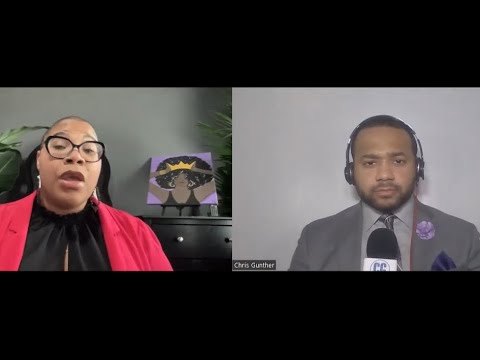
Kimberley Alexander Opens Up About The Importance of M.O.B.B.
Kimberley Alexander, Executive Director of M.O.B.B. (Moms Of Black Boys United) caught up with Chris to discuss the importance of the organization and their upcoming podcast!
-
Beth Lunde published Everything Urban (eurweb.com) - November 2023 in MOBB United in the Media 2023-12-05 08:22:40 -0600
Everything Urban (eurweb.com) - November 2023

Kimberley R. Alexander Named Executive Director of M.O.B.B. United, Inc. and MOBB United for Social Change (MUSC)
Moms of Black Boys United, Inc. (M.O.B.B. United), and M.O.B.B. United for Social Change, Inc. (MUSC), sister advocacy and support organizations dedicated to reshaping societal perceptions and policies concerning Black boys and men, has announced the appointment of Kimberley R. Alexander as its new Executive Director.
-
Beth Lunde published Statement to the Council of the District of Columbia Committee on the Judiciary and Public Safety in Official Statements 2023-12-04 15:02:37 -0600
Statement to the Council of the District of Columbia Committee on the Judiciary and Public Safety
Council of the District of Columbia
Committee on the Judiciary and Public Safety
November 29, 2023On behalf of Moms of Black Boys (M.O.B.B.) United, Inc. I stand before you as the DC Chapter Lead for M.O.B.B. United and MOBB United for Social Change (MUSC). We are a movement of concerned mothers who have joined together to uplift and protect Black boys and men. We represent every race, age, socioeconomic background, marital status and education level.
MOBB United was founded in July of 2016 after the back-to-back murders of Alton Sterling and Philando Castile on July 5th and 6th. Philando Castile was murdered during a traffic stop on a Facebook Live feed, while many of us watched in horror, as the passenger in the car went live to record the aftermath.
The officer involved discharged his firearm seven (7) times at close range. Five (5) of those shots hit Philando Castile and took his life. It was the cell phone video, the advocacy of the Castile Family and the community unity that ultimately led to the release of the police dash cam video. Both videos were paramount in unearthing the facts throughout the investigation.
I am here today, also, as a Black and Blue Mom who has a unique multidimensional perspective as it relates to body worn cameras, community unity, and fostering a proactive dialogue as we strive to serve our DC residents. Transparency and accountability are NON-NEGOTIABLE.
Read more -
Policy and Advocacy Committee Progress
By Delicia Hand and Frankie Robertson
 The MOBB United for Social Change (MUSC) Policy and Advocacy Committee sets the strategic policy priorities and drives advocacy initiatives for the organization. As a committee, we set MUSC’s policy agenda, research policies that impact Black men and boys, identify opportunities to advocate on behalf of our sons, and guide MUSC’s approach and responses to instances where Black men and boys have been victims of unjustified force and violence by police.
This summer, the committee continued its work of developing strategy and content for many different calls to action. Some calls to action served to bring awareness to incidents around the country where Black men and boys were subjected to excessive force when interacting with police and to demand swift and transparent action to bring officers to justice. These calls to action included: Carteret, NJ; Lansing, IL, and San Diego, CA.
Other calls to action served to move forward our state legislative campaign, which we launched this Spring. As the legislative season winds down in most state houses, we have continued to focus on states with longer legislative sessions, such as CA. There we continue to support Senate Bill 10 (to change the bail system), which is being considered by the CA Assembly. We have issued a call to action for members to contact representatives who voted against the measure previously.
This summer, the committee has focused on outreach and developing relationships with key stakeholders -- peer organizations, national policymakers, and social justice press. Specifically we have revitalized #MOBBUnitedGetInvolved, as we have encouraged members to reach out to Congressional representatives to request in district recess meetings in August and have attended town hall meetings. Meetings thus far have included those with representatives Cedric Richmond, Representative Elijah Cummings, Senator Kirsten Gillibrand, Senator Kamala Harris, and Representative Gwen Moore. (Also, we have meetings planned with representative Karen Bass and are securing meetings with representatives Anthony Brown, Al Green, David Scott, Sheila Jackson Lee, Hank Johnson, G.K. Butterfield, and Frederica Wilson.)

Olivette Green Temple (left), Representative Cedric Richmond (center), andFrankie Robertson (right)

Frankie Robertson (left) and
Olivette Green TempleIn these meetings, we have introduced MUSC and shared with them how our sister organization, Moms of Black Boys United, Inc., can be a resource to them and their constituents and how MUSC serves as a voice to improve policies to change outcomes for Black men and boys.
We have engaged 15 Congressional Representatives; there are 520 who still need to hear from a mom. Do you have a relationship with your Congressional representative or their staff? Would you like to inform them about policies that impact your sons? Reach out to [email protected] to learn how you can represent MUSC at a meeting with your Congressional representative.
Additionally, committee members have ensured that MUSC has a presence at key legislative conferences and convenings. In early August, MUSC attended the Georgia Black Legislative Conference, and in mid-September, members also will attend the Congressional Black Caucus’ (CBC) Annual Legislative Conference. We also are looking to participate on a panel and are in conversation with CBC staff about this possibility. This Fall, if you would like to attend the CBC with us, contact: [email protected].
Moving forward, we will pivot from legislative advocacy and outreach this Fall to begin planning for 2018’s legislative and electoral season. We are doing research to organize a policy platform so that we are prepared for the 2018 legislative session. In addition to finding legislation that is aligned to our mission, the platform will allow us to identify and develop legislative proposals proactively. During the electoral season, we plan to educate the membership, ensure that our members and age appropriate sons are registered to vote, work with the membership to get out the vote, and conduct targeted outreach. There are many law enforcement officials -- mayors, district attorneys and sheriffs, among others -- who will be elected next year. They need to know moms all over the country are engaged and will vote. We need YOU for this fight!
The committee also now houses our Call Center -- a virtual group of moms who make regular calls to law enforcement officials and elected representatives in support of our advocacy actions. Laila Aziz is the new lead of the call center.
If you have the drive to seek policy solutions and be an advocate for your son(s), then please join the Policy and Advocacy Committee. If you have a background in law or policy, then the committee especially needs YOU! We meet every other week on Thursdays via conference call at 10 PM EST. For more information contact: [email protected].
*As members have taken the time to attend congressional town hall meetings in their states and districts, we have asked them to share in the private MOBB United Facebook group what they have done personally to affect change for our Black sons. Communications Director Vanessa McCullers attended Congressman Brad Sherman’s meet and greet at a recent town hall at Lake Balboa Park in her local California area. She shared with him her concerns about the school-to-prison pipeline and bail reform, and they discussed setting up a future meeting. Her post is republished with here with her permission.
“Stopped by the park to meet Congressman Brad Sherman. We talked for about 8 mins about white supremacy, monetary bail reform, the school-to-prison pipeline oh and this little organization called Moms of Black Boys United for Social Change. We certainly didn't agree in certain areas but I was pleased that he took a moment to talk and showed general concern for most things. My little detour only took 15 mins out of my busy evening. A phone call takes less time, a tweet even less. We MUST raise our voices on a local/state level. That's where it counts! I may not have the right to vote in this country but I'll be damned if my voice isn't heard in other ways.”

Vanessa McCullers and
Congressman Brad Sherman
Tammy Greer (left),
a Senator Kirsten Gillibrand staffer, and
MUSC Founder Depelsha McGruder
lobbying on behalf of our sons at the office of Senator Gillibrand (D-NY)Also, Patty Garrett attended a town hall meeting in Fulton County, Georgia with Senator Johnny Isakson (R-GA) at Kennesaw State, a local university. She explained what MOBB United is all about, expressed her concerns for her son and all Black boys and men, and questioned his support of de-escalation training for law enforcement. Patty also attended a town hall meeting with Representative John Lewis (D-GA).

Patty Garrett and
Representative John Lewis
-
Beth Lunde published MOBB United for Social Change Policy Committee Progress in Cause (c4) 2023-12-03 10:22:25 -0600
MOBB United for Social Change Policy Committee Progress
by Marijke Annis
 The MOBB United for Social Change MUSC) Policy Committee drives advocacy initiatives for our advocacy arm, MOBB United, Inc.. As a committee, we research policies that impact Black men and boys, identify opportunities to advocate on behalf of our sons, and guide MOBB United's approach and responses to instances where Black men and boys have been victims of unjustified force and violence by police.
The Policy Committee works closely with our Call Center to mobilize our members to respond to key legislative issues and unjustified use of force by law enforcement. In response to the murder of Jordan Edwards in Balch Springs, TX, we issued a call to action asking members to demand the arrest and termination of the officer and release of the video evidence to the Edwards family. Thanks in part to the efforts of our Call Center, and all the Moms who contacted Balch Springs and Dallas County officials, the officer was terminated from his position and charged with the crime against Jordan.
This Spring, the Policy Committee identified key state legislation that would benefit our Black men and boys and worked with local members on passage of that legislation. In Louisiana, local member Frankie Robertson, (a member of the Policy Committee), worked with other members and with local organizations to secure passage of a Criminal Justice Reform package that included increased training requirements for law enforcement officers; expanded eligibility for alternatives to incarceration; streamlined the parole release process for nonviolent offenders; focused prison space for serious and violent offenders; some lowered mandatory minimum sentences as well as provisions to reduce re-offenses and improve re-entry processes.
In Texas, the Policy Committee worked with local members to pass the Sandra Bland Act, which included diversion to mental health facilities when a person in custody shows signs of mental duress, use of eye sensor technology to ensure safety of individuals in county jails, and de-escalation training for all Texas law enforcement officers.
In California, MOBB United for Social Change continues to support Senate Bill 10, which seeks to eliminate money bail. CA Senate passed their version of the bill, and the Assembly moved it out of committee on July 12th. We will continue to monitor this legislation as it moves through the Assembly.
The Policy Committee, in partnership with the Call Center, local MOBB United members and other advocacy groups, successfully pushed for Raise the Age legislation in New York. Governor Cuomo signed the legislation on April 10, 2017, resulting in 16- and 17-year-olds charged with misdemeanors being handled in Family rather than Criminal Court and no longer allowing 17-year-olds to be held in county jails like Rikers Island. We believe this is a significant step forward in safeguarding our sons in the state of New York.
Moving forward, we are also focusing on developing relationships with other critical groups that will help further our mission. We are seeking meetings with key Congressional and State legislators to educate them on MOBB United for Social Change and to explore how to partner with them. We have also identified other advocacy groups with similar missions and are reaching out to forge new partnerships with them to help drive policy change.
There are many subcommittees that drive our work and that would welcome your participation. Our Policy Updates subcommittee drives our research, to make sure we are always aware of the latest developments. Our Policy Message subcommittee ensures that we develop the most compelling, data-driven arguments and messaging to support our advocacy efforts. Finally, our Policy Strategy subcommittee ensures that we create and leverage the right opportunities to impact policies and successfully advocate for our sons.
Our efforts to advocate for better policies for our sons have only just begun. There are opportunities to change laws and policies at the local level by voting in new mayors, district attorneys and sheriffs who embrace improving law enforcement policies and practices or supporting critical state legislation that protects our sons. To do this, we need local mobilization from our members. We need YOU for this fight!
If you have the drive to seek policy solutions and be an advocate for your son(s), then please join the Policy Committee. If you have a background in law or policy, then the Policy Committee especially needs YOU! We meet every other week on Thursdays via conference call at 10 PM EST. For more information contact: [email protected].
-
Black Maternal Trauma - Part 1
By Uchechi Eke

The Facts
-
581 people have been killed by the police in 2017 so far.
-
25% (a quarter) or 145 of those killed in 2017, are Black. African-Americans make up just 13% of the population.
-
309 Black people were killed by the police in 2016.
-
Black people are 3 times more likely to be killed by police than white people.
-
Black people are 7 times more likely to be killed in Oklahoma than Georgia.
-
19 of the 100 largest U.S. city police departments kill Black men at higher rates than the U.S murder rate.
-
99% of police involved shootings in 2015 did NOT result in any officer being convicted.
The Problem
To coincide with MOBB United’s 1-year anniversary, I was asked to compile a list of unarmed Black boys/men killed by police between July 2016 and July 2017.
I knew the data existed.
I knew it would be a daunting and cumbersome task.
I knew it would resurrect painful memories.
I never expected my role as a mother to be questioned: “Am I really in a position to protect my son?”
The Washington Post began tracking all fatal shootings by on-duty police in 2015, in the aftermath of the 2014 shooting of Michael Brown in Ferguson, Missouri.
Since Brown’s killing, other fatal shootings by police, many captured on video, have fuelled protests and calls for reform. Some police chiefs have taken steps in their departments to address and reduce the number of fatal encounters, yet the overall numbers compared to 2016 remain unchanged.
I have highlighted a few cases that occurred in the last 12 months below:
2016:
2017:
Nothing prepares you for the emotional trauma you experience every time you read the details of a new case. I find myself always caught off guard by the images of the deceased. I am always haunted by the pain that lies behind the eyes of the mother.
As mothers of Black boys, there should be a limit to our pain. There should come a time when extrajudicial killings are a thing of the past. There should be an upper ceiling, where the number of extrajudicial killings should never reach. But there is no limit. Black bodies are slain almost weekly. And every time we witness a murder, we re-live the trauma.
The images of unarmed Black boys/men being brutalized by police has become inescapable. The cases above highlight this pandemic. We visualise the victim as being our son(s). Viewing videos of people being gunned down by police is not psychologically healthy. The mental scars that result from witnessing excessive force against Black people creates a form of collective trauma. Police brutality then becomes part of our daily consciousness -- our lived experience -- causing anger, fear, frustration and a sense of hopelessness.
African-Americans experience Post-Traumatic Stress Syndrome (PTSD) at a higher rate than any other ethnic group, according to a study published in 2010 by PubMed. Repeatedly viewing physical trauma can have other adverse effects often associated with post-traumatic stress, including jumpiness, anxiety and paranoia.
Another worrying trend, is that almost all victims noted above were unarmed or had a toy weapon. Implicit bias leads many officers to possess an irrational and heightened sense of fear. They see Black males and automatically ‘fear for their lives’. Cops are trained to be calm in hostile environments. As part of their training, de-escalation is the first priority. But in recent incidents, ‘shoot on sight’ seems to be the modus operandi. Even when officers carry militarized weapons, or are accompanied by a SWAT, they still are incapable of controlling the situation without resorting to deadly force.
But the question still remains: “How can I protect my son?”
Am I complicit in de-humanising our boys by sharing these graphic images and by researching their deaths?
Does the utility of these images, circulated on social media and via news channels actually inspire shame, outrage and activism?
Or do they just desensitize us, exacerbating our pain and further contributing to our psychological trauma?
Have we become too ‘numb’ to act?
The Solutions
Whether we see these killings as being state sanctioned, racially motivated or part of the wider system of white supremacy, the discourse must change -- from a discussion about criminal justice reform, to a debate that results in society viewing this problem as a national health crisis.
With nominal charges being brought, and without convictions that stick, justice seems out of our reach. Thus, if there is a cultural shift, and the death toll is regarded as a public health issue, affecting not only the immediate family, then maybe we would see a reduction in race-based police violence.
Our boys must be seen as human first. Not as criminals. Not as a menacing threat. In a significant number of the cases, the victim struggled with a mental illness. They needed medical assistance, not a death sentence.
The trauma faced by mothers, members of the family and the wider community must be taken into account. Departments cannot continue to use our tax dollars on settlements. They cannot afford to recurrently restore communities after protests and riots. If departmental budgets are reduced, or pensions affected, salaries capped, steep penalties applied (including a rise in insurance premiums for fatal force), or higher conviction rates, then maybe, just maybe, we will begin to see less of our sons dying before our very eyes.
We know ‘respectability politics’ is flawed and biased. More white boys use drugs, but are not profiled or arrested at higher rates. White boys also wear hoodies and low-slung jeans, but they are not stopped, searched and beaten.
So what do we tell our sons, and as mothers, what can we do? Here are some solutions:
-
Education & Awareness – Our boys need to be more vigilant, go out in ‘groups’. Many of the cases involved a single boy or man. It is more likely that police would shoot a lone individual, than a group of boys or men. Our sons also need to ‘know their rights’ when confronted with police. They need to know what to ask and how to respond.
-
Community Policing – More Black men and black women need to work on the police forces. Officers should reside in the areas they police. It is less likely that a cop who is acquainted with his neighbours would harm them. We must also make an effort to engage with officers, attend meetings and hold them accountable.
-
Advocacy & Action – More moms need to campaign, fundraise and take part in demonstrations -- from writing letters and signing petitions, to calling local police departments and attending rallies, to being visible at public consultations, meetings and hearings – it all helps the cause!
-
Political Engagement -– Representation matters -- from the cop on the street to the judge in the courtroom. We need to be occupying all positions. We also need to vote during all local, state and presidential elections. We need to canvass on behalf of fair officials and chiefs, and root out and vote against the corrupt and indifferent ones.
Let me know what you think. What else can we do? How do you protect your peace and protect your son?
Join us on the front lines. We can no longer be witnesses to murder. Silence is complicity. Get involved and register at www.mobbunited.org/join.
-
-
Beth Lunde published MOBB United at Essence Woke Mom 2017 Festival in Cause (c4) 2023-12-03 09:55:11 -0600
MOBB United at Essence Woke Mom 2017 Festival
By Vanessa McCullers
Moms of Black Boys United (MOBB United) marks the first in a series events to commemorate
the organization's 1st anniversary, with a debut at the 2017 Essence Festival.July 4, 2017 (New Orleans) – Moms of Black Boys United (MOBB United) made its first appearance with great impact at the 2017 Essence Festival. Their booth activation in the Ernest N. Morial Convention Center was a hub of activity, attracting moms from all over the country looking for a way to help protect their sons, nephews, brothers and husbands from harsh injustices of police brutality, racial profiling and the school-to-prison pipeline. This activation signified the first major step in a series of events that will commemorate the organization’s first anniversary or “MOBBiversary.” The Essence Festival theme, "Woke Wonderland," provided a perfect fit for the organization, which is currently running a "Woke Mom" campaign to identify their members who are fully aware and ready to address the issues that face the men in their lives. "Being at the Essence Festival for the first time to spread the mission of MOBB United was an amazing experience. I met women from all over the globe who personally connect to our message of protecting our sons. The spirit of sisterhood and empowerment was invigorating and inspiring,” shared Founder Depelsha McGruder.
Please enjoy this video of that monumental event. You’ll also find the full post-event press release attached, including some wonderful details and photo.
-
Beth Lunde published MOBB United for Social Change Call Center in Cause (c4) 2023-12-03 09:49:21 -0600
MOBB United for Social Change Call Center
By Laila Aziz

Crys Baldwin
Chair of Events and DemonstrationsWhen I joined the MOBB United Call Center, the first thing I realized was the passion and motivation of Crys Baldwin, Chair of Events and Demonstrations Crys Baldwin. I bet that will be one of the first things any new Call Center team member will notice, too; Crys’ passion is hard to miss!
Crys has named our call center the Gladiators; the fearless 300 ready to fight relentlessly for our sons. Instead of swords, our weaponry of choice is smart mobile devices, emails, and landlines. We navigate expertly through the battlefield, a tangible force based on Crys’ vision. We are sometimes fondly known as “The Mighty Rapid Response Team,” a virtual army of moms who are spread throughout the nation.
My introduction to the Call Center was swift and effective. I found myself commenting on a post on the MOBB United Facebook page; I was outraged by the inhumane treatment of young Black men. I was sick and tired of being sick and tired. In response to my comment, I received a notification and a link to MOBBUnited.org, with a comment from Crys Baldwin saying, “Join us in our Call Center, become a member of MOBB United and make a change.
I was curious but also overwhelmed by life. I clicked the link provided and created a guest account. I was not ready to fully commit. To my surprise, within 24 hours I found myself on the telephone with Crys receiving an orientation to the Call Center. This is a forum Crys leads where she works marvels behind the scenes with her dedicated team of moms. Crys utilizes Servant Leadership, and she marches with us moms, challenging us to fight for our sons. Servant Leadership is a performance driven, reverse hierarchical approach where employees or workers are valued. Crys exemplifies this, working as hard as her team and often working for her team and pulling out the best in each of us. We each do a little, in organized and intentional ways, to challenge a system that seems determined to dehumanize our curly-haired legacies.
My orientation conversation with Crys was relaxed but informative; she provided her vision, which ultimately is a team of moms working in a fully-staffed call center. We know our targets, and our mobilization efforts are accurate. We are multi-pronged in our approach -- contacting mayors, police chiefs, district attorneys and government officials. We are ‘on the ground’ working with families when a crisis happens in our respective cities. “Five minutes, 2 calls, ladies; 5 minutes 2 calls is all I ask,” Crys states.
This work can make you weary sometimes, but Crys will ‘pick you up’ when you are tired; she will pray with you, and she will challenge you to take on leadership. She is both motivational and inspirational. She coached us through calling legislatures to ensure that the Sandra Bland Act in Texas passed. Crys hurdled obstacles with us as we demanded sentencing reform in Louisiana, the state with the highest incarceration rate. Under her leadership, we have demanded justice for Jordan Edwards, the Michigan 5, Jayson Negron and Darius Smith. She will push you to join the movement, often proclaiming “The Revolution Ain't Free!”
Crys will tell you about Gabriel, her miracle, and why she fights like she does for our sons. Using her gifts, Crys will give you a space, a purpose and the means to create a better world for our boys and young men.
After spending 5 minutes of my lunch break making a few calls, I feel empowered. When I go home after helping with the Call Center, I tuck my twins into bed and watch them as they sleep. But now, for the first time, after watching the news or reading my Facebook timeline, my terror has subsided. I no longer feel powerless. I am a MOBB.
Join the Call Center and rally with us for change so that you, too, can feel frustrated and powerless no longer. To join, contact Crys Baldwin, Chair of Events and Demonstrations, at [email protected].